
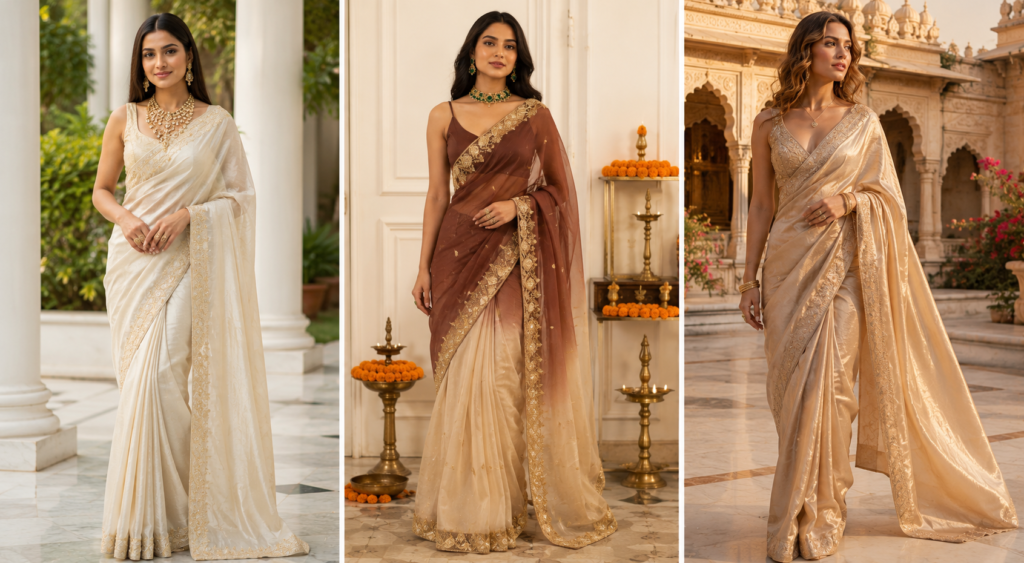
There is something deeply poetic about a saree. It is not merely a garment — it is a legacy, a language, a piece of art that a woman wraps around herself and carries into the world. Among all the colours, fabrics, and styles that exist in the vast universe of Indian fashion, ivory sarees with golden borders hold a very special place. They are the embodiment of understated luxury — quiet in their palette, but deeply commanding in their presence.
Whether you are attending a wedding, a festive puja, a family celebration, or an upscale cultural event, an ivory or cream saree with golden detailing speaks a language that transcends trends. It is a style that has graced royalty and continues to dominate red carpets and bridal mandaps alike. In this post, we dive deep into the world of ivory and golden sarees — exploring three stunning styles, how to wear them, what to pair them with, and why they remain one of the most enduring choices in Indian womenswear.
1. The Classic Ivory Silk Saree with Zari Border: Purity Meets Opulence
The first look is an epitome of bridal elegance — a rich ivory silk saree adorned with a delicate yet impactful gold zari border. The sheen of the silk catches light with every movement, creating a luminous effect that feels almost ethereal. The gold embroidery along the border is intricate without being overwhelming — it frames the drape beautifully, drawing the eye to the edges of the fabric while keeping the overall aesthetic clean and refined.
This particular style works exceptionally well for daytime ceremonies, engagement functions, or any event where you want to look bridal without being overdressed. The ivory base keeps the look fresh and luminous against all skin tones, while the gold adds just the right amount of richness. Pair it with a matching silk blouse with full embroidered sleeves or a sleeveless fitted blouse to keep the focus on the saree itself.
How to Style This Look:
- Jewellery: Go for a traditional kundan or polki set — a layered necklace, drop earrings, and a maangtika for full bridal effect.
- Blouse: A deep-back blouse with gold piping or a halter-neck style adds a modern touch while keeping the tradition alive.
- Hair: A neat low bun adorned with jasmine flowers or pearl pins perfectly complements the classic look.
- Footwear: Gold juttis or embellished heels ground the ensemble in festive Indian fashion.
2. The Gradient Ombre Saree: Where Contemporary Art Meets Indian Tradition
The second look is a breathtaking departure from convention — an ombre saree that transitions from rich chocolate brown at the top to the softest ivory at the hem. This gradient effect, which has taken the Indian fashion world by storm in recent years, gives the six yards a painterly, artistic quality that feels utterly modern while still honouring the traditional draping form. The gold border runs consistently through the entire length, anchoring the two tones and tying the look together with quiet sophistication.
What makes this saree truly extraordinary is the duality it embodies. The warm brown pallu draped over the shoulder gives depth and drama to the upper body, while the lighter ivory at the feet creates an airy, graceful finish that flows as you walk. It is a saree that photographs beautifully, especially in golden hour light — making it an ideal choice for wedding receptions, festive evenings, or sangeet ceremonies.
How to Style This Look:
- Jewellery: An emerald or ruby choker with matching drop earrings, as seen in the image, adds dramatic colour contrast against the warm tones.
- Blouse: A spaghetti-strap or thin-strap blouse in matching brown or nude keeps the ombre effect as the centrepiece.
- Hair: Loose, soft curls or a romantic half-up style complement the artistic vibe of the ombre drape.
- Setting: This saree shines brightest at indoor receptions with warm, golden lighting or outdoor evening events.
3. The Champagne Satin Saree: Liquid Gold on Six Yards
The third look is the most glamorous of the trio — a champagne-toned satin saree that shimmers like liquid gold under light. The fabric drapes in long, fluid folds that pool at the feet, creating a dramatic silhouette that feels equal parts regal and cinematic. A delicately embroidered golden border adds structure to the edges, while the deep V-neckline of the wrap-style blouse gives the entire look a sensual, high-fashion edge.
The champagne-gold tone is particularly flattering on warm and medium skin tones, adding a luminous warmth that makes the wearer glow. This is the kind of saree that commands attention without trying — it is the choice of a woman who knows exactly who she is and dresses accordingly. Ideal for wedding receptions, formal galas, anniversary celebrations, or any event that calls for a truly showstopping look.
How to Style This Look:
- Jewellery: A delicate diamond or CZ pendant necklace and thin bangles keep the focus on the fabric’s luxurious sheen.
- Blouse: A plunging V-neck blouse in matching champagne satin or a deep-back design adds drama and modernity.
- Hair: Voluminous waves or a high, sleek ponytail elongate the silhouette and add a runway-ready quality.
- Shoes: Strappy gold stilettos or embellished mules add height and complete the ethereal look.
Why Ivory and Golden Sarees Are a Timeless Fashion Choice
Fashion cycles change season to season, but ivory and gold have remained constants in Indian bridal and festive fashion for centuries. The reason is simple: this combination is universally flattering, culturally significant, and endlessly adaptable. Ivory is a neutral that works beautifully across all skin tones — from the deepest ebony to the lightest wheatish complexion. It reflects light rather than absorbing it, giving the wearer a naturally radiant appearance.
Gold, meanwhile, is embedded in the cultural DNA of Indian celebrations. It represents prosperity, auspiciousness, and celebration. When paired with ivory or cream, gold does not compete with the base fabric — it complements it, elevating a soft, quiet shade into something magnificent. This is why you will find ivory-and-gold sarees at everything from intimate puja ceremonies to grand destination weddings.
Choosing the Right Fabric for Your Ivory Saree
Different fabrics create very different effects. Here is a quick guide:
- Pure Silk — The most traditional and luxurious choice; ideal for weddings and formal events. It drapes stiffly and holds its pleats beautifully.
- Organza — Lightweight and translucent with a subtle stiffness; great for layered or ombre looks like the second style above.
- Satin — Fluid and luminous; perfect for the champagne-glam aesthetic of the third look.
- Georgette — Soft, flowy, and easy to drape; a versatile everyday festive option.
- Tissue Silk — Has a delicate shimmer woven into the fabric itself, reducing the need for heavy embellishment.
Final Thoughts
An ivory saree with a golden border is more than a fashion choice — it is a statement of grace, heritage, and quiet confidence. Whether you choose the regal ivory silk classic, the artistic ombre gradient, or the cinematic champagne satin look, you are draping yourself in a tradition that has been celebrated for generations. The beauty of these sarees is that they allow you to be both rooted in culture and completely contemporary at the same time.
As you step into your saree, remember that the most important accessory you bring to any look is your own presence. Wear it with ease, drape it with love, and let the ivory and gold do what they do best — make you unforgettable.
Frequently Asked Questions (FAQ)
Q1. Can I wear an ivory saree to a wedding if I am not the bride?
Absolutely yes. The tradition of avoiding white or ivory at weddings is specific to certain regional customs and primarily applies to the immediate family of the bride in some communities. In most modern Indian contexts, ivory, cream, and off-white sarees are perfectly appropriate for guests. To differentiate from the bride, style yours with colourful or statement jewellery — an emerald choker, ruby earrings, or a turquoise set will set your look apart beautifully.
Q2. Which blouse style works best with an ivory silk saree?
For a traditional ivory silk saree, a matching silk blouse with full or three-quarter embroidered sleeves is the classic choice. If you prefer something modern, a sleeveless or spaghetti-strap blouse in the same fabric keeps the saree as the focal point. Deep-back blouses, V-neck styles, and off-shoulder blouses are also increasingly popular for evening events and reception looks.
Q3. How do I care for a silk saree with gold zari embroidery?
Always dry-clean a silk saree with zari work — never machine-wash or hand-wash it, as water can damage the metallic zari threads and cause the silk to shrink or lose its sheen. Store it wrapped in a soft muslin cloth rather than plastic covers, as silk needs to breathe. Avoid hanging silk sarees for long periods; fold them gently and refold along different lines every few months to prevent permanent crease marks.
Q4. What jewellery suits an ivory and gold saree best?
Gold jewellery is the natural partner to an ivory saree, but the style depends on the occasion. For bridal or heavy festive wear, traditional kundan, polki, or temple jewellery sets make a stunning combination. For receptions or evening events, delicate diamond-set gold or CZ jewellery in a contemporary design keeps things elegant without being overwhelming. Coloured stones — emerald, ruby, or sapphire — add a pop of drama that photographs beautifully against the ivory backdrop.
Q5. Is an ombre saree appropriate for traditional occasions?
Ombre sarees have become widely accepted even for traditional occasions over the past few years, particularly at weddings, sangeet events, and festive gatherings. Since the ombre technique is achieved through dyeing the fabric itself rather than adding embellishments, it retains the dignified drape and feel of a traditional saree. A brown-to-ivory ombre with gold borders, as featured in this post, is especially tasteful and appropriate for religious or family celebrations.
Q6. Which skin tone does a champagne or ivory saree suit the most?
The good news is that ivory and champagne are among the most universally flattering shades in the entire colour spectrum. These warm neutrals complement deep, medium, and fair skin tones alike. On deeper skin tones, ivory creates a striking luminous contrast that is absolutely stunning. On medium-warm complexions, champagne gold reads as almost glowing. On fairer skin, the warmth of ivory prevents the look from appearing washed out, unlike stark white.
Q7. How do I drape a saree to look more slimming and elegant?
The Nivi drape — the most common Indian saree draping style — naturally creates a flattering silhouette for most body types. To appear more slimming, keep your pleats narrow and tuck them slightly inward rather than flaring them out. Wearing a well-fitted petticoat that matches the saree colour prevents fabric bunching. Pulling the pallu across the body diagonally rather than letting it hang straight creates a fluid, elongating line. High heels also visually lengthen the frame and add grace to your walk.