
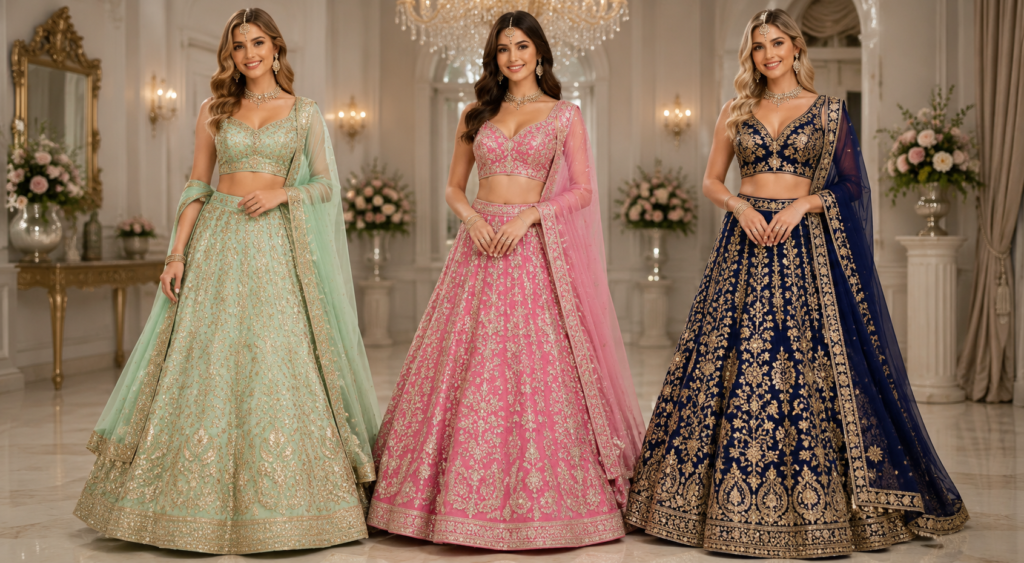
Among all the bridal outfit choices available in Indian fashion, the heavy zari work lehenga choli holds a place of unmatched reverence. Zari, the art of weaving fine metallic threads — traditionally gold or silver — into fabric to create intricate patterns, is one of India’s oldest and most celebrated textile crafts. When applied to a bridal lehenga, zari embroidery transforms an already beautiful garment into a wearable piece of art, rich with heritage, craftsmanship, and timeless elegance.
In 2026, heavy zari work lehengas are more popular than ever, with designers reimagining traditional gold threadwork in fresh color combinations, modern silhouettes, and innovative fabric pairings. Whether you are a bride searching for your dream look, a bridesmaid wanting to complement the bridal party, or a wedding guest aiming to make an impression, this guide will walk you through everything you need to know about zari lehenga cholis — from the top designs and most flattering colors to expert styling tips.
What Is Zari Work and Why Is It So Special for Bridal Lehengas?
Zari refers to the fine metallic thread used in traditional Indian embroidery and weaving. Originally made from real gold and silver, modern zari is typically crafted from metal-coated threads that replicate the lustrous, reflective quality of precious metals while being more accessible and lightweight.
What makes zari work so beloved in bridal fashion is the quality of light it creates. Under natural sunlight, photography lighting, or the warm glow of wedding diyas and chandeliers, zari embroidery catches and reflects light in a way that no other embellishment quite replicates. A heavy zari lehenga does not just look beautiful — it glows, shimmers, and radiates in a way that feels genuinely regal.
Common Types of Zari Work Found in Bridal Lehengas:
- Kalabattu Zari: The finest and most traditional form, using twisted metallic thread for delicate, intricate patterns such as paisleys, florals, and geometric borders.
- Badla Work: Flat metallic strips woven or stitched into fabric to create bold, graphic patterns with a strong reflective surface.
- Karchupi or Cardwork: Raised zari embroidery that creates a dimensional, sculptural texture on the fabric surface, adding depth and richness.
- Zardozi: The most opulent form of zari embellishment, combining gold thread with sequins, beads, and semi-precious stones for a heavily embossed, jewel-like finish.
- Gota Patti with Zari: A fusion technique that combines flat ribbon-like gota with zari threadwork for a festive, layered effect popular in Rajasthani bridal fashion.
Top Zari Lehenga Designs That Are Trending in 2026
This season, designers are blending the depth of traditional zari craft with modern aesthetic sensibilities to create bridal lehengas that feel rooted yet refreshingly contemporary. Here are the top designs defining zari bridal fashion right now.
- All-Over Gold Zari on Pastel Base Fabric: One of the most striking trends of 2026 is dense gold zari embroidery applied across the full surface of a pastel-colored lehenga. Sage green, powder pink, and soft mint bases covered entirely in fine gold threadwork create a look that is simultaneously soft and opulent. The contrast between the gentle base color and the richness of the gold embroidery is breathtaking, especially under evening lighting.
- Navy and Royal Blue with Heavy Gold Zari: Deep jewel-toned fabrics like navy blue and royal blue serve as powerful canvases for gold zari embroidery. The contrast is dramatic and regal, evoking the look of classic Mughal-era brocades while feeling entirely modern in cut and silhouette. Wide zari borders, large floral motifs, and paisley detailing on a deep blue base are among the most photographed bridal looks of the season.
- Tonal Zari on Matching Fabric: A more understated but equally luxurious approach is tone-on-tone zari, where the metallic thread closely matches the base fabric. For example, gold zari on a deep golden yellow lehenga, or silver zari on an ivory or white base. The result is a subtle, sophisticated shimmer that catches light beautifully without creating high contrast.
- Layered Lehenga Skirts with Zari-Bordered Tiers: Multi-tiered or layered lehenga skirts with zari-embroidered borders on each layer are having a major moment. The cascading tiers with gold borders create movement and visual drama while keeping the overall look structured and traditional.
- V-Neck or Sweetheart Cholis with Zari Detailing: Modern choli designs with deep V-necklines or sweetheart cuts, featuring concentrated zari work at the neckline and sleeves rather than full-body embellishment, are a popular choice for brides who want a slightly lighter feel while maintaining the richness of the craft.
- Coordinated Zari Dupatta: In 2026, the dupatta is being treated as a design statement equal in importance to the lehenga itself. Heavily zari-embroidered dupattas with wide borders and pallu detailing, coordinated to match or complement the lehenga, add a regal finishing layer to the entire bridal look.
The Best Colors for Heavy Zari Work Bridal Lehengas
Color choice is deeply personal in bridal fashion, but certain shades have a proven ability to make gold zari embroidery look its most radiant. Here is a breakdown of the top color choices and why each one works so beautifully.
- Mint and Sage Green: Fresh, romantic, and contemporary, mint and sage green bases make gold zari pop without the visual intensity of deeper shades. These colors are particularly stunning in daylight and work beautifully for morning or afternoon ceremonies.
- Hot Pink and Rose Pink: Pink lehengas with heavy gold zari are a celebration in themselves. The warmth of gold against pink creates a festive, joyful energy that photographs magnificently. Hot pink with dense gold threadwork is especially popular for sangeet and reception nights.
- Navy and Cobalt Blue: Rich, saturated blue with gold zari is one of the most powerful color combinations in Indian bridal fashion. It has a timeless, aristocratic quality that suits both daytime and evening functions.
- Deep Red and Crimson: Red remains the most traditional bridal color in India, and with heavy zari embroidery, it reaches its most regal expression. A deep crimson or ruby red lehenga covered in gold threadwork is a quintessential bridal statement.
- Ivory and Off-White: For brides seeking a lighter, more modern aesthetic, ivory and cream lehengas with either gold or silver zari work offer understated luxury. They photograph beautifully and allow the craftsmanship to be the true focal point.
- Deep Plum and Magenta: Bold, jewel-toned alternatives to red that pair magnificently with gold zari and feel increasingly popular among contemporary brides who want to step outside convention while maintaining a traditional level of opulence.
How to Style a Heavy Zari Lehenga Choli
A heavy zari lehenga is a complete statement in itself, and styling it well is about enhancing its beauty without overwhelming the craftsmanship. Here are expert styling tips for every element of the look.
Jewelry
Match the metal tone of your jewelry to the zari thread color — gold zari calls for gold Kundan, polki, or jadau pieces; silver zari pairs beautifully with diamond-finish or oxidized silver jewelry. For a heavily embellished lehenga, concentrate statement jewelry at the ears (chandelier jhumkas or layered drops work beautifully) and keep the necklace more delicate. A maang tikka and a slim nath (nose ring) add traditional bridal completeness without competing with the embroidery.
Dupatta Draping
The dupatta on a zari lehenga deserves careful attention. A classic double-shoulder drape with the pallu falling gracefully at the back creates the most traditional bridal look. For a reception or sangeet look, a single-shoulder drape with the dupatta pinned at the wrist adds modern flair. If the dupatta itself carries heavy zari borders, let it fall naturally rather than pinning it in too many places — the weight and movement are part of its beauty.
Footwear
Embellished juttis with gold embroidery or stonework are the most traditional and harmonious footwear choice with a zari lehenga. For added height, embellished block heels or kitten heels in metallic gold or nude work beautifully. Since the lehenga skirt is typically floor-length, the footwear may not be fully visible, but the added height and posture that comes from a slight heel significantly improves how the entire outfit drapes and moves.
Hair and Makeup
For pastel-toned zari lehengas, soft bridal makeup with warm rose or peachy tones, a glowing base, and defined eyes creates a romantic, fresh look. For deeper jewel-toned lehengas, a bolder lip in berry, plum, or classic red with a more dramatic eye can be stunning. Hair styles like a low braided bun adorned with maang tikka and floral pins, or soft side-parted waves, complement most zari bridal looks beautifully.
Fabric Choices That Make Zari Work Shine
- Silk: The classic base for zari weaving and embroidery. Silk has a natural sheen that complements gold thread beautifully and gives the lehenga a structured, regal drape.
- Velvet: Particularly stunning for winter weddings. The depth of velvet fabric makes gold zari embroidery appear almost three-dimensional, creating an extraordinarily rich visual effect.
- Georgette: A lighter option that allows for heavy embroidery without making the overall garment too heavy to wear comfortably. Ideal for all-over zari embroidery designs.
- Net: Sheer base fabric with zari embroidery creates a delicate, layered effect. Often used for dupattas or as a top layer over a silk base skirt.
- Organza: Crisp and light, organza holds zari embroidery well and creates a beautiful airy quality, perfect for summer or destination weddings.
Conclusion
A heavy zari work lehenga choli is more than a bridal outfit — it is a connection to centuries of Indian craftsmanship, a celebration of artistry, and a garment that carries the weight of one of life’s most significant moments. Whether you choose a soft mint lehenga with fine gold threadwork, a vibrant pink creation with dense floral zari motifs, or a majestic navy blue set with bold gold embroidery, the craft of zari ensures that every look is truly extraordinary.
Take your time choosing the right design, color, and silhouette. Try different pieces in person when possible, and pay attention to how the embroidery catches light in different settings. When you find the right zari lehenga, you will know instantly — it is the moment an outfit stops feeling like clothing and starts feeling like your story, beautifully told in gold.
FAQs
Q1. What is the difference between zari work and zardozi embroidery?
Zari work refers broadly to the use of fine metallic gold or silver thread in weaving or embroidery to create patterns on fabric. Zardozi is a specific and more elaborate form of zari embellishment that combines gold thread with sequins, beads, and sometimes semi-precious stones, creating a raised, three-dimensional effect. Zardozi is generally considered the most opulent and formal type of zari embellishment used in bridal fashion.
Q2. Which color lehenga looks best with heavy gold zari work?
Gold zari work looks stunning against rich jewel tones like navy blue, deep red, and royal green, as well as against soft pastels like mint green, blush pink, and ivory. The choice depends on the function and personal preference. Pastels with gold zari create a romantic, contemporary look while jewel tones with gold zari deliver a more traditional, regal appearance.
Q3. How heavy is a typical heavy zari work lehenga and how do I manage wearing it for a long function?
A heavily embroidered zari lehenga can weigh anywhere from two to five kilograms or more, depending on the fabric and density of embellishment. To manage comfort during long functions, choose a lehenga skirt with a well-constructed waistband that distributes the weight evenly. Wearing comfortable block-heeled footwear rather than stilettos also helps with posture and endurance. Scheduling brief seated breaks during the event is strongly recommended.
Q4. Is a zari lehenga suitable for all wedding functions or only the ceremony?
A heavy zari lehenga is most suited to formal wedding functions such as the ceremony (shaadi), reception, and engagement. For lighter events like mehndi or haldi, a simpler version with zari border detailing rather than full all-over embroidery is more appropriate. The fabric and color choice can also be adjusted to suit the time of day and formality of each function.
Q5. What jewelry works best with a mint green or pastel zari lehenga?
Delicate gold Kundan or polki jewelry works beautifully with pastel zari lehengas. Chandelier jhumkas or layered drop earrings in gold with pearl or white stone detailing pair elegantly with mint green or blush pink. A slim nath, maang tikka, and thin gold bangles complete the look without overpowering the soft, romantic quality of the pastel palette.
Q6. How should I care for and store a heavy zari lehenga after the wedding?
Dry cleaning by a specialist in delicate embroidered garments is the safest cleaning method for a zari lehenga. After cleaning, store it wrapped in a clean muslin or cotton cloth rather than plastic, which can trap moisture and damage the metallic threads. Avoid folding the lehenga along the embroidered sections for extended periods as this can distort the threadwork. Store flat if possible, in a cool, dry, and dark environment.
Q7. Can a zari lehenga be re-worn or styled differently after the wedding?
Yes, with some creativity. The choli can often be paired with different skirts or even worn as a crop top with a plain skirt for festive occasions. The dupatta can be repurposed as a stole or decorative drape. Some brides also have the lehenga professionally altered into a shorter skirt or adapted into a different garment. The key is choosing a lehenga in a color and design that feels versatile enough to revisit.
Q8. How early should I order a custom zari bridal lehenga?
For a custom heavy zari bridal lehenga, it is strongly recommended to place your order at least four to six months before the wedding date. Heavy zari embroidery, particularly handmade zardozi work, is extremely time-intensive and skilled craftsmen require adequate time to complete it without rushing. Earlier ordering also allows for multiple fitting sessions and any necessary adjustments before the final look is confirmed.